

Finding the right classroom for autistic students can feel overwhelming, but understanding what each option offers can make the process easier.
By learning about the benefits and potential challenges of different educational settings, parents and carers can confidently make informed decisions that best support their child's unique needs. Every classroom is different, and understanding your child's strengths and support needs and how these would be supported in the classroom options available to you is an important first step.
Classroom options
Mainstream classrooms
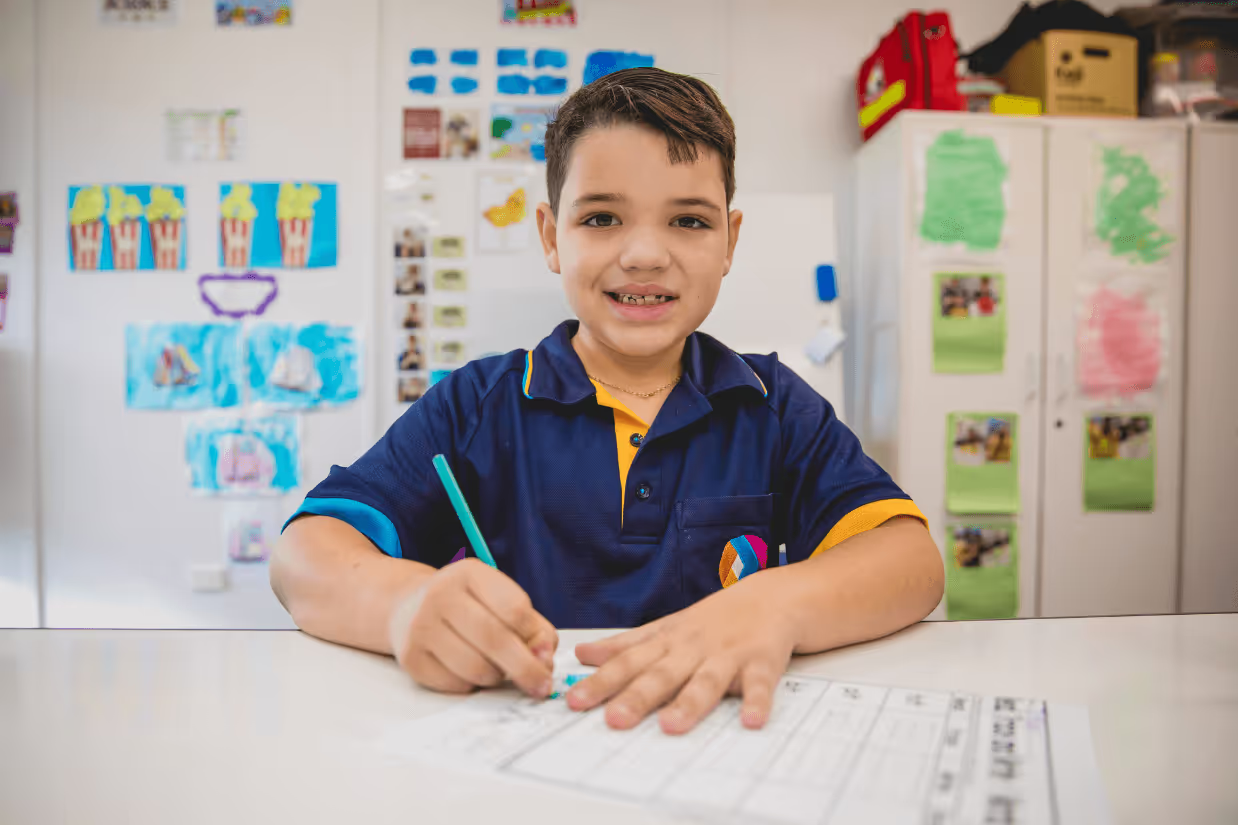
Mainstream classes are classrooms in mainstream schools where students with autism learn alongside their neurotypical peers. Mainstream classrooms will have students from different backgrounds and with different abilities, including both neurotypical and neurodivergent children.
Mainstream classrooms allow children with autism to be taught the same curriculum as neurotypical children and can provide them with opportunities to interact with these children socially. Adjustments and accommodations should be made to ensure an autistic student can participate in a mainstream classroom to the best of their ability while having their unique learning and support needs met.
Some autistic children may spend their entire school day in a mainstream classroom. Others may spend part of their school day in a mainstream classroom, and other parts of the day working in smaller groups or one-to-one with learning support staff. Some autistic students may begin with partial attendance in a mainstream classroom and eventually work towards attending a mainstream classroom full-time.
Mainstream with support
In a supportive mainstream environment, students with autism may receive consistent additional resources and assistance tailored to their needs. This might include the aid of learning support staff or access to therapies such as speech or occupational therapy. This ensures a child’s individualised learning needs can continue to be met in a mainstream setting and that they are integrating with their peers where possible.
Support classes/units within mainstream schools
Some mainstream schools offer specialised support classes or units specifically for children with additional educational needs, such as autistic children. These units are staffed by educators with additional training and expertise, providing a more tailored educational experience within the larger mainstream school community. These settings offer the benefits of more individualised support with the advantage of access to mainstream school facilities and social integration opportunities (e.g., spending recess and lunchtime with children outside of the support unit).
Flexible/part-day schooling
Flexible schooling arrangements, such as part-day attendance or attendance on selected days, can accommodate children with autism who may need more time to transition to school, or might be struggling to attend regularly. This approach allows for a customised educational experience that acknowledges and supports the child's health, learning, and social needs outside the traditional full-day school model.
Dual enrolment
Dual enrolment allows for a hybrid educational experience, where a child can split their time between different educational settings, such as a special school and a mainstream school or a mainstream school and homeschooling. Dual enrolment can help autistic students participate in learning and social opportunities with children their age while receiving the specialised learning and developmental support they need, which a mainstream environment may not be able to offer on their own.
Remote learning
Remote learning occurs when a child who attends a traditional school (in-person schooling) is not able to do so for a certain period of time or for a certain reason. Different to distance education or homeschooling, which are more permanent measures, remote learning is a temporary option that ensures children who cannot physically attend school can continue their education at home to avoid falling behind.
Remote learning is coordinated by a child’s regular classroom teacher/s and may involve the contribution of learning support staff and other staff where relevant. Students may be required to join live video links (e.g., Zoom) to receive lessons or discuss their progress with their teacher/s. A child may also need to watch complete pre-prepared lessons in their own time where a teacher is not available to instruct them.
Homework, assessments and more complex activities are sent to the child’s family, either via post or electronically. Children can seek assistance from their families to complete this work or contact their teacher or support staff for assistance.
Distance education
Distance education transfers the traditional classroom to an online platform, enabling children to engage with the standard curriculum at their own pace and in their own homes. This option is particularly suited for children who can work independently under parental/carer supervision or for families in very remote areas. Students in distance education programs can seek support from teachers and subject coordinators or from their families where appropriate.
Homeschooling
Homeschooling is an option where families take a more hands-on approach to their child's education. Parents/carers design a curriculum that interests and engages their child, offering the ultimate flexibility in teaching methods and pacing. While this option requires significant commitment from parents, it provides the opportunity to tailor the educational experience to the child's unique strengths and needs. Note that families must submit the curriculum they design to their state or territory education department for assessment before homeschooling can begin.
Things to consider
Each classroom option will have advantages and disadvantages, which will vary greatly depending on your child's needs and the quality and availability of services at their school or in your local area. Here are some things families should consider: